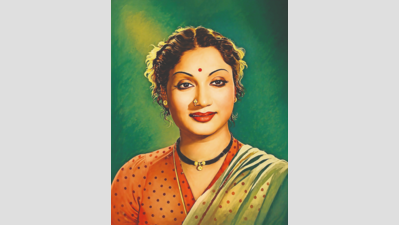
When a heroine slaps a villain on screen, it’s typically the climax—justice served in slow motion. But when G Varalakshmi delivered her first on-screen slap, it wasn’t an act of retaliation. It was a declaration.
In a film industry where women were expected to cry prettily, love silently, and suffer gracefully, G Varalakshmi walked in with a cigarette in one hand, a script in the other, and zero interest in playing along. She wasn’t just an actress. She was a disruption — a rowdy heroine in an era that didn’t know it needed one. And she didn’t just steal scenes—she rewrote the rules.
The Making of a Rebel
G Varalakshmi wasn’t born into privilege or film dynasties. Born in Andhra Pradesh in the early 20th century, her entry into cinema wasn’t paved with introductions or family connections. It was ambition and audacity that got her through the studio doors.
At a time when most female actors were selected based on their looks, demureness, and social respectability, G Varalakshmi stood out for the opposite reasons. She was loud. Unapologetic. Fearless. Her presence on screen didn’t soothe—it challenged.
Her early roles in the 1940s and 1950s were nothing like the archetypal “good woman” roles dominating Telugu cinema. She played characters who argued with elders, defied tradition, and at times, outright rebelled against societal structures. In Mala Pilla (1938), one of her breakout performances, she played a village girl who questions caste discrimination and stands up to oppressive customs. This wasn’t just storytelling—it was social commentary wrapped in bold acting.
Defying Convention, On and Off Screen
The term “rowdy actress” wasn’t just a label slapped on G Varalakshmi for her on-screen roles. It was a reflection of her real-life persona. She smoked in public, lived independently, and famously refused to conform to the “ideal woman” image that producers and audiences demanded.
While other actresses were being marketed as the “perfect daughters” or “devoted wives,” G Varalakshmi embraced her complexity. She didn’t shy away from playing flawed, even controversial women—characters who had affairs, made questionable choices, or rejected marriage altogether.
This autonomy extended off-screen. She was known to argue with directors, challenge scripts, and walk off sets if she disagreed with how a scene was being portrayed—especially if it reduced women to passive victims.
“Why should she cry every time the hero leaves? Why can’t she walk away and start a new life?” — G Varalakshmi, in a 1954 interview.
This wasn’t just acting. It was activism through narrative.
Signature Roles That Challenged the Status Quo
G Varalakshmi didn’t just act—she weaponized her performances. Here are some of her most defiant roles:
#### Mala Pilla (1938) – The Social Firebrand Playing a progressive village girl, she challenged caste hierarchies and gender norms. The film was banned in several districts for being “too provocative.” That only amplified its impact.
#### Drohi (1948) – The Woman Who Refused Redemption In a rare twist, her character wasn't “reformed” by love. She remained defiant to the end, choosing independence over reconciliation. Audiences were shocked. Critics were divided. But it sparked debate—exactly what she wanted.
#### Pichi Pullayya (1953) – Satire with Sting A comedy-drama where she played a sharp-tongued widow who takes control of her late husband’s business. Through humor, she dismantled stereotypes about widows being passive or pitiful.
Each of these roles shared a common thread: agency. Her characters didn’t wait to be saved. They made decisions—sometimes bad ones, sometimes bold ones—but always their own.
Why “Rowdy” Was a Badge of Honor
The label “rowdy actress” was initially used to discredit her. Critics and conservative circles dismissed her as “undisciplined” or “unfeminine.” But G Varalakshmi reclaimed the term.
She understood that in a patriarchal industry, any woman who refused to be quiet, obedient, or decorative would be labeled disruptive. And she wore that disruption like armor.
Her “rowdiness” wasn’t about violence or chaos. It was about refusal—refusing to be sidelined, refusing to play weak, refusing to disappear after the hero got the spotlight.
She didn’t just exist in films. She contested them.
Legacy That Outlived Her Roles
G Varalakshmi’s influence stretches far beyond the films she starred in. She paved the way for later generations of bold actresses in Telugu and Tamil cinema—women like Vijayashanti, Ramya Krishnan, and even modern performers like Keerthy Suresh and Sai Pallavi, who take on complex, morally ambiguous roles.
She proved that a woman could be central to a narrative without being romanticized. That a character could be flawed, fierce, and still worthy of empathy.
Even more significantly, she challenged the behind-the-scenes power structures. Her insistence on script approval, fair pay, and creative input set precedents that are still referenced in actor union negotiations today.
The Price of Defiance
But rebellion has its costs. G Varalakshmi’s career had sharp peaks and sudden drops. Studios blacklisted her for years. Producers refused to cast her in mainstream family dramas. Some of her most powerful films were shelved or poorly marketed.
She was rarely invited to industry events. When awards lists came out, her name was often omitted—even when her performances were the most talked about of the year.
Yet, she never softened her stance.
“There is no point in being in cinema if I have to lie about who I am,” she once said. “Let them ignore me. Let them forget me. But don’t ask me to be someone else.”
How She Stole the Show—Every Time
It wasn’t just her roles. It was her presence.
Where other actresses relied on glamour or grace, G Varalakshmi commanded attention through intensity. Her eyes didn’t plead—they accused. Her voice didn’t sing—it declared.
Even in ensemble casts, she dominated scenes not by shouting louder, but by being still when others moved. By speaking last, but meaning most.

Directors learned to write roles around her unpredictability. Writers began crafting stronger female antagonists and moral gray areas because she could sell them convincingly.
She didn’t steal the show. The show bent to her.
A Blueprint for Modern Rebellion
Today, when we talk about actresses who “break the mold,” we often cite international names—Margot Robbie for producing complex female stories, or Viola Davis for demanding equal pay. But G Varalakshmi was doing this in 1940s India—with far greater risk.
Modern filmmakers can learn from her playbook:
- Cast against type. Don’t limit women to one archetype.
- Let them be flawed. Perfection is boring. Conflict is compelling.
- Honor their voices. An actress isn’t a mannequin—she’s a collaborator.
- Challenge narratives. Stories shape society. Change them to change minds.
She didn’t just act in films. She used them as battlegrounds.
The Cultural Ripple
G Varalakshmi’s influence wasn’t confined to cinema. She inspired female writers, activists, and even politicians in Andhra and Tamil Nadu. Her interviews were quoted in feminist circles. Her life story was taught in film studies programs.
Even today, film students analyze her performances for their subtext, their defiance, their layered delivery. A single raised eyebrow in Drohi is dissected like a Shakespearean soliloquy.
She didn’t just entertain. She educated. She provoked. She stayed.
Closing: Be Uncomfortable on Purpose
G Varalakshmi’s career wasn’t about fame. It was about freedom—freedom to act, to speak, to exist on her own terms.
If there’s a lesson for today’s creators, it’s this: Don’t just seek visibility. Seek impact.
Be the one who makes audiences blink twice. Who disrupts the pattern. Who refuses the easy role.
Because the ones who are called “too much” today are the ones remembered tomorrow.
Steal the show. Not with tricks. With truth.
FAQ
Who was G Varalakshmi? G Varalakshmi was a pioneering Telugu actress known for her bold performances and defiance of traditional gender roles in Indian cinema during the 1940s–60s.
Why was she called the “rowdy actress”? The term was used both critically and affectionately to describe her rebellious on-screen roles and her refusal to conform to societal or industry expectations off-screen.
What are some of G Varalakshmi’s most famous films? Key films include Mala Pilla (1938), Drohi (1948), and Pichi Pullayya (1953), all of which featured strong, unconventional female leads.
Did G Varalakshmi face backlash for her roles? Yes. Her performances often sparked controversy, and she was blacklisted by studios at times for her outspoken nature and refusal to tone down her characters.
How did G Varalakshmi influence modern cinema? She paved the way for complex female characters in South Indian films and inspired later actresses to take on bold, non-traditional roles.
Was G Varalakshmi involved in social causes? Yes. Many of her films addressed social issues like caste discrimination, women’s independence, and widow rights, reflecting her personal beliefs.
Is there a biography or documentary about her? While no major English documentary exists, several Telugu-language retrospectives and academic papers have been published on her life and work.
FAQ
What should you look for in G Varalakshmi: The Rowdy Actress Who Broke the Mold? Focus on relevance, practical value, and how well the solution matches real user intent.
Is G Varalakshmi: The Rowdy Actress Who Broke the Mold suitable for beginners? That depends on the workflow, but a clear step-by-step approach usually makes it easier to start.
How do you compare options around G Varalakshmi: The Rowdy Actress Who Broke the Mold? Compare features, trust signals, limitations, pricing, and ease of implementation.
What mistakes should you avoid? Avoid generic choices, weak validation, and decisions based only on marketing claims.
What is the next best step? Shortlist the most relevant options, validate them quickly, and refine from real-world results.